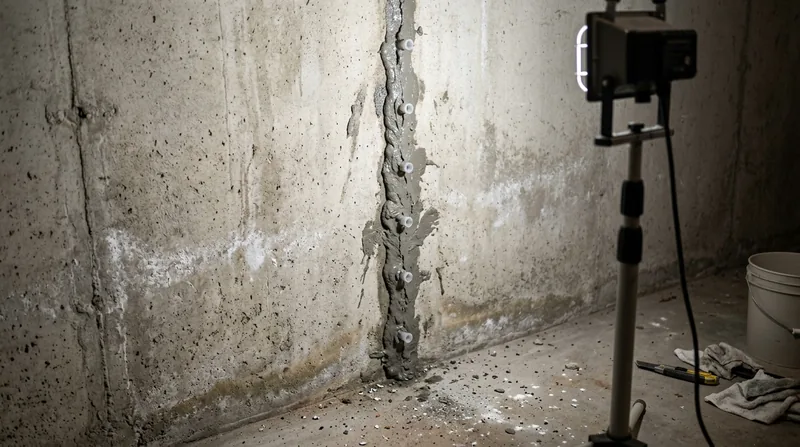




Frederick sits in the Monocacy valley at the foot of the Catoctin Mountains, where red clay over limestone holds water in spring and freeze-thaw swings open cracks in old masonry. In the 1800s-1930s brick rowhouses near Carroll Creek and on the streets around downtown, stone and early block foundations take a beating from hydrostatic pressure every time the water table rises. If you have a crack weeping after heavy rain, Foundation Crack Repair in Frederick starts with figuring out whether that crack is cosmetic or structural before anyone touches a caulk tube. We inspect the wall, the footing drain, and the grading around it, then match the repair to the actual failure mode. For homeowners in Walkersville, Middletown, and Urbana dealing with the same red clay, the answer is rarely the same twice. Start with a free basement inspection so we can tell you what the crack is doing.
Why Foundation Cracks Open in Frederick's Clay and Limestone
The dominant failure mode in this city is not one big event. It is the annual freeze-thaw cycle working on old masonry while red clay soil swells in spring and shrinks in summer, and groundwater pushes against the wall from the outside. Downtown rowhouses with stone foundations and old clay tile drains are especially prone, and the 1950s-1990s subdivisions on the west and south sides show the same pattern in poured and block walls.
- Hydrostatic pressure forces water through hairline cracks and cold joints after heavy storms.
- Freeze-thaw cycles widen existing cracks in brick, stone, and early block foundations.
- Settling soil around footing drains lets water pool at the base of the wall.
- Downspouts that dump near the foundation send roof runoff straight into the soil.
- Efflorescence and white staining on the wall tell you water is moving through the masonry.
When we see efflorescence on a basement wall in Brunswick or New Market, that is a moisture signal, not a cosmetic one, and it tells us where to look first.
Key info: A rowhouse off East Church Street in downtown Frederick had a vertical crack at the corner that wept every March. The cause was a failed section of old clay tile drain, not the crack itself. Sealing the crack alone would have failed by the next spring.
For the official word on structural repair permits and inspection requirements, the City of Frederick building department is the authority to check before any structural work begins.
How We Diagnose and Repair Cracks in Frederick Basements
We do not sell one patch for every crack. The first step is reading the wall: crack width, direction, whether it is moving, and what the water is doing behind it. A vertical shrinkage crack in a poured wall is a different animal from a stair-step crack in block or a horizontal crack that suggests the wall is bowing. The repair follows the diagnosis.
- We walk the basement and exterior, checking crack pattern, efflorescence, and grading.
- We test for active moisture and map where water is entering after rain.
- We recommend epoxy injection for stable non-structural cracks and polyurethane injection for cracks that are still leaking.
- For wider or shifting cracks, we evaluate carbon fiber straps or wall anchors instead of injection alone.
- We correct the water source where needed, because a sealed crack with pressure behind it will find another path.
If the inspection shows the crack is a symptom of wall movement rather than simple shrinkage, we point you to bowing wall repair rather than sell you an injection that will not hold.
Key info: A 1960s split-level in Thurmont had a stair-step crack in the block wall that looked minor. The wall had moved about half an inch. Epoxy injection would have been the wrong call. Carbon fiber straps and exterior drainage correction were the right answer.
Crack Repair Methods We Use and When Each One Fits
Not every crack needs the same approach, and the table below shows how we match method to condition. The goal is a repair that holds through the next wet season, not a patch that looks good for six months.
| Approach | Description | Best for |
|---|---|---|
| Epoxy injection | Structural-grade epoxy injected through ports to bond the crack faces back together. | Stable, non-leaking vertical cracks in poured concrete walls. |
| Polyurethane injection | Flexible foam that expands and seals active leaks under pressure. | Cracks that are still weeping, especially in block and stone walls. |
| Carbon fiber straps | Straps bonded to the wall to resist inward movement without excavation. | Bowing or cracked block walls with lateral movement. |
| Wall anchors | Anchors driven into stable soil and connected to the wall to pull it back. | Walls that have moved significantly and need realignment. |
| Exterior membrane and drainage | Waterproof membrane and footing drain work to remove the pressure source. | Cracks that keep returning because hydrostatic pressure is not controlled. |
When the real problem is water pressure, sealing the crack without addressing drainage is a temporary fix. That is when we recommend interior drain tile or exterior drainage work alongside the crack repair.
Foundation Crack Repair Cost in Frederick: What to Expect
Most single-crack injection repairs in Frederick start at $450, and that figure covers the inspection, port installation, injection, and cleanup. The price moves up from there based on crack length, wall material, access, and whether the crack is active or dormant. A stair-step crack in a block wall in Myersville takes more work than a clean vertical crack in a poured wall in Urbana.
Factors that affect cost include the number of cracks, whether the wall needs carbon fiber or anchors, whether drainage correction is required, and how accessible the wall is inside the basement. Getting two or three estimates is smart because a crack that looks simple can turn out to be a symptom of a bigger water problem. Our full pricing overview lays out the ranges so you can compare bids on the same scope.
Be wary of any quote that seals a crack without checking the exterior grade or the footing drain. The cheapest patch is the one you pay for twice.
Choosing a Foundation Crack Repair Contractor Near Frederick
Hiring the right contractor near Frederick means asking the questions that separate a specialist from a general handyman. You want someone who reads the wall, explains the diagnosis, and puts the scope in writing. That is the standard we hold ourselves to, and it is the standard you should hold any contractor to.
- Confirm the contractor is licensed and insured, and ask for a certificate of insurance before work starts.
- Get at least two or three written estimates on the same scope so you can compare fairly.
- Ask for local references, especially from homeowners with the same foundation type as yours.
- Ask whether a permit is required for the work, and check with the local building department since rules vary by jurisdiction.
- Get the warranty terms in writing, including whether it is transferable.
If the contractor cannot explain why the crack is there, they cannot explain why their repair will hold. Reach out through our contact page to schedule an inspection and get a straight answer.
Foundation Crack Repair Near Me: What Frederick Homeowners Should Know
When you search for foundation crack repair near me in Frederick, you will find a mix of basement waterproofing specialists, general foundation contractors, and plumbers. The difference matters. A specialist reads the whole system, the wall, the water table, and the drainage, while a generalist may seal the crack and leave the cause in place.
We are a basement waterproofing specialist, not a general foundation firm. That means we tell you plainly when a simple crack seal is enough and when hydrostatic pressure means the real fix is drainage. If your crack is in a wall that has moved, we say so and point you to the right repair. For homeowners in Walkersville, Mount Airy, and Emmitsburg, the same honest diagnosis applies. Call (240) 549-6262 and we will tell you what we see.
Foundation Crack Repair in Frederick: Pricing Guide
| Service | Price | Details |
|---|---|---|
| Single crack injection (epoxy or polyurethane) | Starting at $450 | Includes inspection, port installation, injection, and cleanup for one typical non-structural crack. |
| Multiple crack injection | Starting at $750 | Priced per crack after the first, with access and wall material driving the final number. |
| Structural repair (carbon fiber straps or wall anchors) | On estimate | Requires on-site evaluation of wall movement, soil pressure, and anchor embedment before pricing. |
| Crack repair plus drainage correction | On estimate | When hydrostatic pressure is the cause, crack sealing is paired with drain tile or exterior drainage work. |
| Travel | Included | In Frederick and surrounding areas, no separate call-out or mileage fee. |
| Estimate | Free | Response within 24h at (240) 549-6262, no obligation to book. |
Indicative pricing, the exact cost depends on square footage, finish, and site access. Free personalized estimate within 24h at (240) 549-6262.


